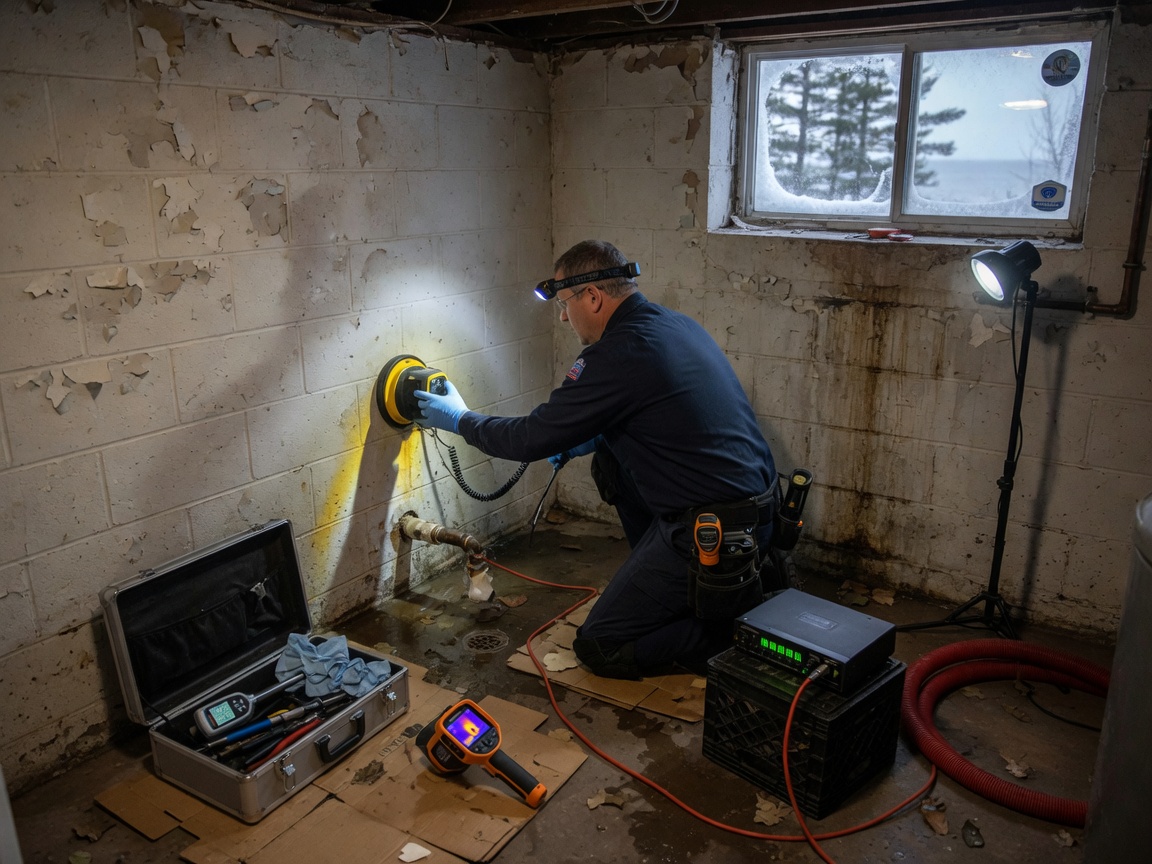
Duluth homes built from the 1980s onward often sit on monolithic slabs with copper or PEX supply lines embedded directly in the concrete. Hot summers push soil expansion while mild winters allow groundwater to linger, creating pressure points where pipes rub against rebar or shift at expansion joints. Acoustic listening devices and thermal cameras let technicians trace these leaks to within a few inches before any concrete is cut.
Many properties near Duluth Town Green and Infinite Energy Arena sit on clay-heavy Gwinnett soil that holds moisture longer than sandy lots in Suwanee or Lawrenceville. This slows evaporation and masks small leaks until they reach the slab edge or foundation wall. Technicians check both interior and exterior hose bibs, water heater connections, and irrigation manifolds because slab leaks frequently originate from these entry points rather than the main line itself.
When a leak is confirmed, the next step is isolating the line segment. Older Berkeley Lake homes may still have galvanized sections that corrode from the inside out, while newer Peachtree Industrial builds use PEX that fails at crimp rings. Mapping the exact route with a line locator prevents unnecessary jackhammering and keeps repair costs contained to the affected run.
Homeowners sometimes mistake ceiling stains or high water bills for roof issues when the real source is a slab leak pushing water under baseboards. A proper detection visit includes a static pressure test and flow measurement to confirm whether the leak is active or seasonal, giving owners clear data before any excavation begins.
Technician insight
In Duluth the thing that catches most people out with Hidden Water Leak Detection is how the clay soil around Berkeley Lake and Peachtree Industrial keeps moisture against the slab edge long after rain stops. Homeowners assume a ceiling stain means a roof problem when the real culprit is a small supply-line leak that has traveled under the base plate for months.
Downtown Duluth Slab Leak Found Under Kitchen
A homeowner noticed steadily rising water use and a faint warm spot near the sink. Acoustic scanning located the leak on the hot line running under the slab toward the water heater. The line was isolated, a small access cut made at the edge of the slab, and the section replaced without disturbing the finished floor.
Hidden Water Leak Detection Services We Offer
✓Acoustic Leak Detection
Uses ground microphones to pinpoint pressurized leaks under slabs in Downtown Duluth and Berkeley Lake homes without guesswork.
✓Thermal Imaging Scans
Infrared cameras reveal temperature differences caused by water escaping under concrete floors near Peachtree Industrial properties.
✓Pressure Isolation Testing
Section-by-section shutoff tests determine whether the leak is on the hot, cold, or irrigation line serving Gwinnett County homes.
✓Slab Edge Moisture Mapping
Checks perimeter soil and foundation walls around Infinite Energy Arena area homes where clay soil keeps moisture trapped against the slab.
✓Irrigation Line Leak Location
Traces leaks in sprinkler supply lines that often run under driveways and sidewalks in Lawrenceville and Suwanee neighborhoods.
Hidden Water Leak Detection Cost in Duluth, GA
| Service | Typical Range | What Affects It |
|---|---|---|
| Hidden Water Leak Detection Visit | $275–$450 | Includes acoustic scan and pressure isolation; price rises if multiple lines must be tested. |
| Thermal Imaging Add-On | $125–$200 | Recommended for homes with finished flooring or complex layouts. |
| Irrigation Line Detection | $200–$350 | Separate visit often needed when the leak is on the sprinkler supply. |
Ranges are typical for Duluth, GA and confirmed with an exact written quote before any work starts.
How it works
- 1
Site Assessment
Review water bill history and visible signs inside the home, then walk the exterior to note meter location and any recent landscaping changes.
- 2
Non-Invasive Scanning
Run acoustic and thermal equipment across the slab to narrow the leak zone while avoiding unnecessary concrete removal.
- 3
Line Isolation
Shut off sections one at a time and monitor pressure drop to confirm the exact pipe run containing the leak.
- 4
Access Plan
Mark the precise cut location and discuss minimal-access options with the homeowner before any demolition.
Pricing
Upfront quotes provided after the detection visit; no hidden fees.