2026-10-24 · David Porter
Checking for Slab Leaks After Summer Storms in Gwinnett County
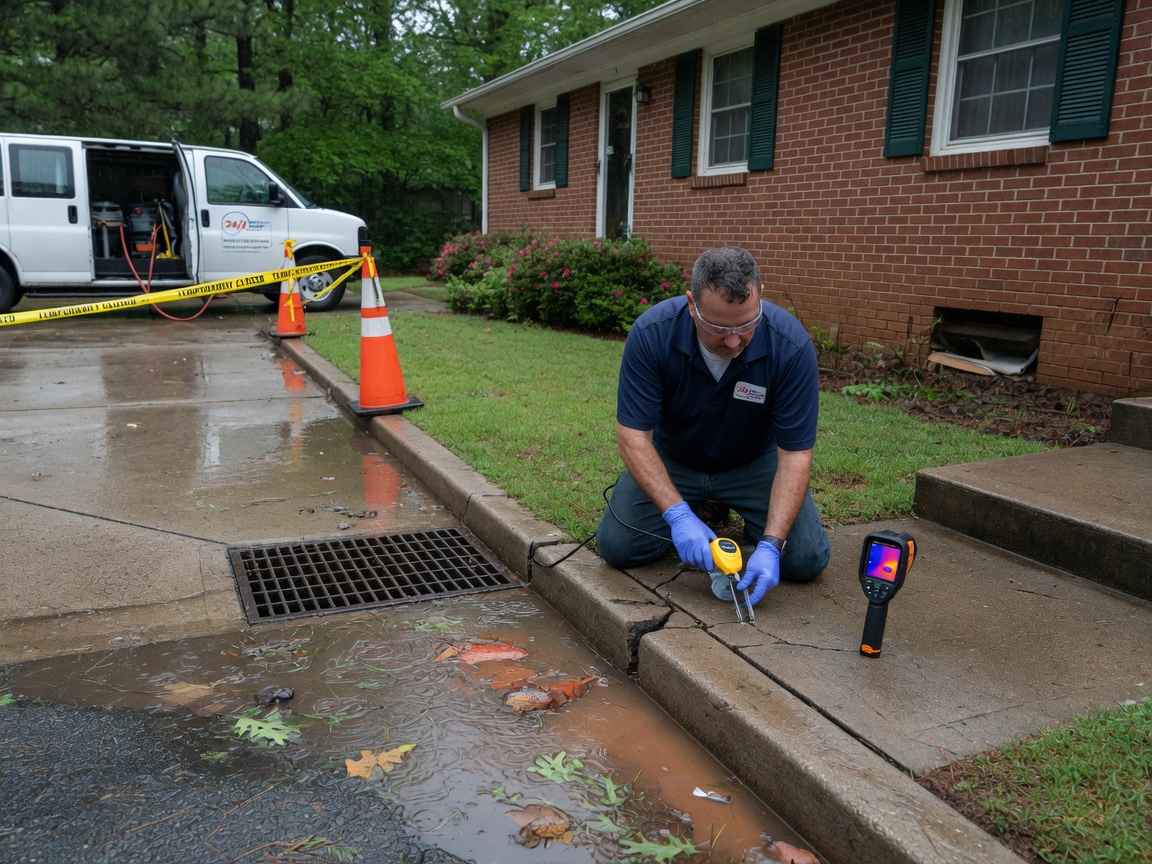
After summer storms in Gwinnett County, monitor your water meter for unexplained flow and inspect floors near exterior walls for new dampness or discoloration, especially in homes built before 2000 around Downtown Duluth and Berkeley Lake.
How Summer Storms Expose Slab Leaks in Gwinnett County
Gwinnett County's humid subtropical climate brings intense downpours that saturate clay-heavy soils and push water toward foundations in areas like Peachtree Industrial and near Duluth Town Green. These rains often follow hot spells, causing soil expansion that stresses older copper or galvanized lines under slabs in neighborhoods such as Berkeley Lake. Homes near the Infinite Energy Arena and in Suwanee or Lawrenceville see similar patterns because mild winters leave pipes less insulated against sudden pressure changes. Water pooling against slabs can erode support or force leaks at joints, turning minor issues into visible problems within days of a storm. Checking promptly prevents further damage to flooring and walls common in Gwinnett's ranch-style and split-level stock.
Visible Signs to Inspect After Heavy Rainfall
Walk through finished spaces and check for musty odors or warm spots on tile floors that indicate hot water lines leaking beneath. Look along baseboards in rooms facing south or west, where storm runoff often collects against the slab edge in Downtown Duluth properties. Measure water usage over 24 hours with all fixtures off; a spinning meter points to hidden flow from storm-related pressure. In Berkeley Lake homes, examine driveways and patios for new settling cracks that align with slab movement from saturated soil. These checks help distinguish storm runoff from actual pipe failures before moisture reaches carpets or drywall.
Soil and Terrain Factors Specific to Duluth
Georgia clay in Gwinnett County expands when soaked by summer storms and contracts during any dry spells that follow, shifting slabs in older sections of Peachtree Industrial and near landmarks like Duluth Town Green. This movement stresses rigid pipes more than flexible ones, creating pinhole leaks that surface weeks later. Properties on slight slopes toward the Chattahoochee or in low-lying spots near Berkeley Lake face higher risk because water lingers against the foundation longer. Checking after each major rain event catches these shifts early, especially in homes from the 1980s and 1990s that line streets around the Infinite Energy Arena.
Practical Steps for Homeowners in Gwinnett
Shut off the main valve at the meter and note the reading, then recheck after two hours to confirm any movement from a possible leak. Scan ceilings below bathrooms and kitchens for faint water rings that appear after prolonged rain. Document any changes with photos and timestamps to share with a plumber if readings stay elevated. Focus first on sections of the home closest to the street or driveway, where storm drains may back up toward the slab in Lawrenceville and Suwanee border areas. These observations narrow down whether the issue stems from recent weather or an older pipe condition.
For detailed detection methods suited to post-storm conditions, review How Georgia Clay Soil Contributes to Slab Leaks in Duluth Homes. If signs persist, schedule Slab Leak Detection through Duluth Slab Leak Pros at 2885 Gordy Pkwy Ste 116, Marietta, GA 30066. Reach us Mon–Fri 8am–6pm or Sat 9am–2pm for targeted checks in Gwinnett County homes.